
Gulfs and Bays of the World MCQs | PDF Free Download

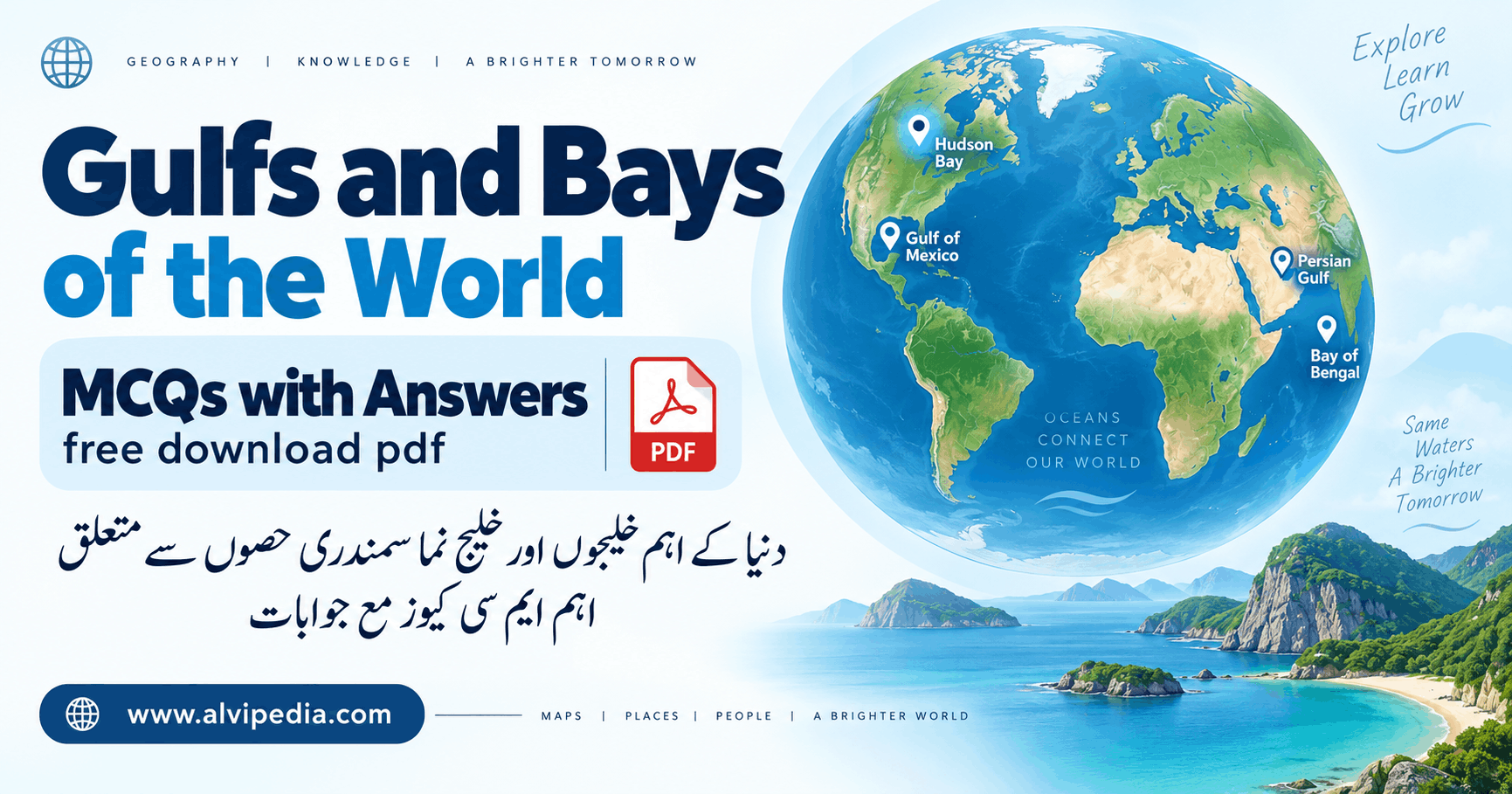
Gulfs and Bays of the World MCQs test knowledge of Earth’s most significant coastal water bodies. From the Persian Gulf to Hudson Bay, these geographical features shape global commerce, climate, and culture. Master these 50 essential questions to ace geography exams and competitive tests.
1. Which is the largest gulf in the world?
The Gulf of Mexico covers approximately 1.5 million square kilometers and is the largest gulf globally.
2. The Bay of Bengal is located in which ocean?
The Bay of Bengal is the world’s largest bay, spanning the Indian Ocean.
3. Which gulf is located between Iran and the Arabian Peninsula?
The Persian Gulf separates Iran from Saudi Arabia and other Arabian states.
4. The Gulf Stream originates in which gulf?
The warm Gulf Stream current originates in the Gulf of Mexico.
5. Which bay is the largest in the world?
Bay of Bengal covers approximately 2.2 million square kilometers.
6. The Gulf of Bothnia is part of which sea?
Gulf of Bothnia is the northernmost arm of the Baltic Sea.
7. Which gulf separates Saudi Arabia from Egypt?
Gulf of Aqaba (also called Gulf of Eilat) separates Saudi Arabia from Egypt.
8. The Bay of Fundy is famous for its:
Bay of Fundy experiences tides reaching 16 meters, world’s highest.
9. Which gulf is located between Vietnam and China?
Gulf of Tonkin borders Vietnam and southern China.
10. The Gulf of Mannar lies between which two countries?
Gulf of Mannar separates southern India from Sri Lanka.
11. Which gulf is connected to the Red Sea by Bab-el-Mandeb strait?
Bab-el-Mandeb connects Gulf of Aden to Red Sea.
12. The Hudson Bay is located in which country?
Hudson Bay is the second-largest bay in the world, located in Canada.
13. Which bay is known as the largest breeding ground for sea turtles?
Bay of Bengal serves as crucial breeding ground for green sea turtles.
14. The Gulf of Carpentaria is located near which country?
Gulf of Carpentaria indents northern Australia’s coast.
15. Which gulf is famous for its pearl fisheries?
Persian Gulf has historically rich pearl fisheries, particularly in Gulf of Bahrain.
16. The Bay of Biscay is part of which ocean?
Bay of Biscay lies off the coasts of France and Spain in the Atlantic.
17. Which gulf is sometimes called the “Gulf of California”?
Sea of Cortez is also known as Gulf of California.
18. The Gulf of Riga is located in which sea?
Gulf of Riga is in the Baltic Sea between Latvia and Estonia.
19. Which bay is the largest estuary in the United States?
Chesapeake Bay is America’s largest estuary system.
20. The Gulf of Sidra is located on the coast of which country?
Gulf of Sidra indents Libya’s Mediterranean coast.
21. Which gulf is known for its “Dead Zone” caused by pollution?
Dead zone in Gulf of Mexico results from Mississippi River nutrient pollution.
22. The Gulf of Kutch is located in which Indian state?
Gulf of Kutch lies along the western coast of Gujarat, India.
23. Why does the Gulf of Bothnia freeze over in winter?
Shallow depth and freshwater inflow lower salinity, causing freezing.
24. Which bay is the world’s largest natural harbor?
Sydney Harbour features exceptional natural harbor protection.
25. The Gulf of Finland connects which two countries?
Gulf of Finland borders Estonia and Finland in the Baltic Sea.
26. Which gulf features bioluminescent waters?
Mosquito Bay in Puerto Rico produces spectacular bioluminescence.
27. Which bay connects to the Mediterranean Sea at Gibraltar?
Bay of Biscay opens to the Atlantic through Gibraltar Strait.
28. The Gulf of Saint Lawrence is part of which country’s geography?
Gulf of Saint Lawrence borders eastern Canada and Newfoundland.
29. Which gulf separates Somalia from Yemen?
Gulf of Aden separates the Horn of Africa from the Arabian Peninsula.
30. The Bay of Plenty is located in which country?
Bay of Plenty is on New Zealand’s North Island east coast.
31. Which gulf lies between Venezuela and Colombia?
Gulf of Venezuela (Maracaibo area) borders both nations.
32. The Gulf of Gabes is located in North Africa near which country?
Gulf of Gabes indents Tunisia’s Mediterranean coast.
33. Which bay is famous for cod fishing historically?
Bay of Fundy supports rich cod and fish populations.
34. The Gulf of Eilat is also known as:
Gulf of Eilat and Gulf of Aqaba are the same body of water.
35. Which bay has the world’s highest tidal range?
Bay of Fundy’s tidal range reaches 16 meters, world’s maximum.
36. The Guanabara Bay is located in which South American country?
Guanabara Bay is Brazil’s famous Rio de Janeiro harbor.
37. Which gulf contains the most oil reserves?
Persian Gulf contains approximately 48% of world oil reserves.
38. The Gulf of Saint George is part of which ocean?
Gulf of Saint George is off Australia’s east coast in the Pacific.
39. Which gulf contains the Kharg Island oil terminal?
Kharg Island in Persian Gulf is Iran’s major oil export facility.
40. The Bay of Plenty receives its name from which characteristic?
Bay of Plenty named for abundant marine and fish resources.
41. Which gulf is named after the Persian Empire?
Persian Gulf named for historical Persian Empire’s influence.
42. The Coral Sea is adjacent to which bay?
Coral Sea contains world’s largest coral reef system near Australia.
43. The Gulf of Venezuela connects to which sea?
Gulf of Venezuela opens into the Caribbean Sea.
44. Which bay has the most shipping traffic globally?
Singapore Strait and Malaysian waters have world’s heaviest shipping.
45. The Caspian Sea’s northern gulf area is called:
Kara-Bogaz-Gol is the Caspian Sea’s eastern gulf extension.
46. Which gulf is located south of the Arabian Peninsula?
Gulf of Aden lies south of the Arabian Peninsula.
47. The Adriatic Sea’s northern region is sometimes called which gulf?
Northern Adriatic features Venice Gulf/Trieste Bay regions.
48. The Gulf of Guinea is located off which continent?
Gulf of Guinea borders West Africa’s Atlantic coast.
49. Which gulf is located between Australia and Papua New Guinea?
Gulf of Papua separates Australia from Papua New Guinea.
50. Which bay is known for its fjords and glaciers?
Glacier Bay contains tidewater glaciers and pristine fjords.
Gulfs and Bays of the World: Geographic Wonders Shaping Our Planet
Gulfs and Bays of the World MCQs explore Earth’s most significant coastal water bodies. These natural features have shaped human civilization, influenced global trade routes, and continue to impact climate and ecosystems. Understanding gulfs and bays is essential for geography mastery and competitive exams.
Understanding Gulfs and Bays: Basic Definitions
The distinction between gulfs and bays lies primarily in size and geographical importance. A gulf is generally a larger, deeper indentation of land surrounded by water, often strategically significant for international commerce and geopolitics. The Persian Gulf, for instance, contains over half the world’s proven oil reserves. Bays are typically smaller, more sheltered indentations offering natural harbors for ports and vessels. The Bay of Bengal, however, defies this rule as the world’s largest bay at 2.2 million square kilometers. Both serve as crucial ecosystems, supporting fisheries, marine life, and human populations along their coasts.
Largest Gulfs and Bays Comparison Table
| Water Body | Location | Area (sq km) | Type | Strategic Importance |
|---|---|---|---|---|
| Bay of Bengal | Indian Ocean | 2,172,000 | Bay | World’s largest bay; major fisheries |
| Gulf of Mexico | Atlantic | 1,544,000 | Gulf | Oil, hurricanes, shipping |
| Persian Gulf | Asia | 239,000 | Gulf | 48% world oil reserves |
| Hudson Bay | Canada | 1,232,000 | Bay | Arctic gateway, marine ecosystem |
| Bay of Biscay | Atlantic | 223,000 | Bay | European shipping route |
Ecological Importance of Gulfs and Bays
These water bodies serve as breeding grounds, nurseries, and feeding areas for countless marine species. The Bay of Fundy’s extreme tides create unique ecosystems found nowhere else on Earth. Coral reefs flourish in shallow gulf waters—the Persian Gulf supports unique coral communities adapted to extreme salinity. These bays and gulfs produce roughly 90% of global fish catch through estuarine nurseries where fish spawn and develop. Mangrove forests along many gulf coastlines protect against storms while serving as crucial habitat for juvenile fish, crustaceans, and migratory birds. Climate regulation represents another vital function; these water bodies moderate coastal temperatures and influence weather patterns across continents.
Strategic and Economic Significance
- Oil and Gas Production: Persian Gulf supplies global energy; Gulf of Mexico produces significant U.S. petroleum and natural gas reserves.
- Shipping Routes: Bay of Bengal and Gulf areas handle millions of containers annually; vital to global supply chains.
- Fisheries: Bay of Bengal supports 100+ million fishery-dependent livelihoods; provides 25% of Asian protein intake.
- Tourism and Recreation: Caribbean bays, Mediterranean gulfs, and Pacific bays attract millions of tourists annually.
- Naval Strategy: Gulfs serve as strategic military positions; Persian Gulf particularly contested for geopolitical power.
💡 Pro Tip for Competitive Exams
When answering MCQ questions about gulfs and bays, remember the acronym ELMS: Economic value (oil, fisheries), Location (which countries border it), Marine life (ecosystems), and Strategic importance (trade routes, military). This framework helps distinguish between similar water bodies and understand why certain gulfs/bays appear frequently in competitive exams.
Regional Gulfs and Bays Overview
Asian Gulfs
Persian Gulf dominates with oil production and trade. Gulf of Thailand supports Southeast Asian commerce. Gulf of Tonkin borders Vietnam and China, creating geopolitical tensions. Gulf of Mannar connects India to Sri Lanka with pearl fisheries. These waters link some of world’s most dynamic economies and fastest-growing regions.
American Water Bodies
Gulf of Mexico shapes U.S. economy through energy and seafood production. Hudson Bay connects Canada to Arctic ecosystems. Chesapeake Bay, America’s largest estuary, supports historic fisheries and modern ports. San Francisco Bay exemplifies natural harbor excellence. These represent diverse ecological and economic functions critical to North American development.
Climate Change Impacts on Gulfs and Bays
Rising ocean temperatures threaten coral reefs in tropical gulfs while affecting migration patterns of commercial fish species. The Gulf of Mexico’s “Dead Zone” expands with agricultural runoff, creating oxygen-depleted waters uninhabitable for most marine life. Sea-level rise threatens low-lying coasts around bays, particularly the Mekong Delta and Bangladesh regions of Bay of Bengal. Changing salinity levels affect species distributions—freshwater-dependent ecosystems face stress while salt-tolerant invasive species expand ranges. Extreme weather intensification means stronger hurricanes (Gulf of Mexico), more severe typhoons (Bay of Bengal), and unpredictable storm surge flooding. Understanding these changes is crucial for environmental protection and sustainable resource management.
Conclusion: Gulfs and Bays in Our Future
Gulfs and bays represent far more than geographical features on a map; they embody complex systems supporting billions of people economically and ecologically. From oil reserves in the Persian Gulf to fisheries in the Bay of Bengal, these water bodies deserve careful study and sustainable management. As climate change and human activities reshape these environments, understanding their characteristics, locations, and significance becomes increasingly important. Mastering gulfs and bays through these MCQs prepares you not just for exams but for engaging intelligently with global environmental and economic challenges ahead.
Additional Resources & Learning Links
- Expand Your Knowledge: Explore more geography topics on Geometry of the Universe MCQs for comprehensive exam preparation.
- Video Reference: Watch educational content on world geography: YouTube – Gulfs and Bays Geography
- Complete Study Material: Visit alvipedia.com for more geography MCQs, competitive exam preparation, and educational resources.
Frequently Asked Questions: Gulfs and Bays
What’s the difference between a gulf and a bay?
Gulfs are generally larger, deeper indentations with greater strategic importance, while bays are smaller, more sheltered water bodies. The Bay of Bengal breaks this rule as the world’s largest bay. Geographic importance and country borders matter more than strict size definitions.
Why is the Persian Gulf important economically?
Persian Gulf contains approximately 48% of world’s proven oil reserves and 35% of natural gas reserves. It’s surrounded by major oil-producing nations (Saudi Arabia, UAE, Kuwait, Iran). Approximately 20% of global oil passes through its narrow Strait of Hormuz.
What causes Bay of Fundy’s extreme tides?
Bay of Fundy’s funnel-shaped geography, combined with the Atlantic Ocean’s tidal forces, creates a resonance effect. Water gets channeled into an increasingly narrow space, causing tidal ranges reaching 16 meters—world’s highest.
How do gulfs and bays affect climate?
These water bodies moderate coastal temperatures, influence precipitation patterns, and generate storm systems. Warm currents like the Gulf Stream from Gulf of Mexico significantly warm Northern European climates. Regional bays influence monsoon patterns and hurricane formation.
What is the Gulf of Mexico’s “Dead Zone”?
Nutrient pollution (nitrogen and phosphorus) from agricultural runoff creates excessive algae growth. When algae decomposes, it consumes oxygen, creating hypoxic waters where marine life cannot survive. The zone expands and contracts seasonally, now covering areas larger than New Jersey.
Why are bays important for fishing?
Bays function as nurseries for fish species—sheltered, nutrient-rich environments where juvenile fish grow before migrating to open ocean. Estuarine bays where rivers meet seawater create ideal conditions for commercial fish species like salmon, cod, and shrimp.